read the full story
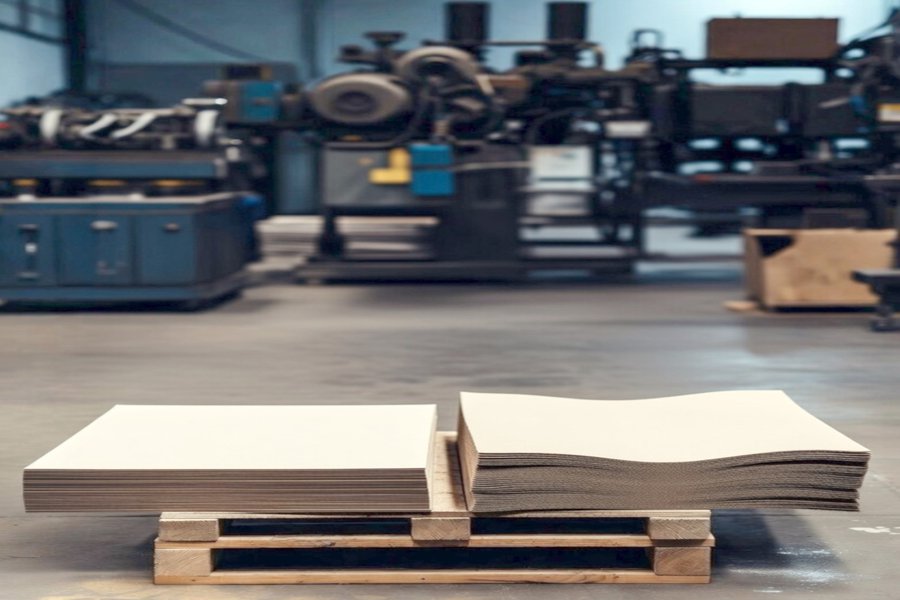
In many cases, the board isn’t “bad.” The root cause is moisture balance and the speed at which the board is forced to change.
Paperboard is hygroscopic, meaning it exchanges moisture with the surrounding air. When conditions swing, especially in winter when trucks are cold and plants are warm and dry, board can gain or lose moisture unevenly. That imbalance creates internal stress, and the sheet relieves it by bending.
What curl really is
Curl is usually a differential problem: one side of a sheet changes faster than the other, or one ply in a laminated construction moves differently than its neighbor. Even small changes can become obvious on large sheets, heavier calipers, and stiffer constructions.
Common triggers we see in real operations
-
Cold truck to warm, dry plant
Material comes in cold, gets unwrapped, and immediately starts changing in a new environment. If one side warms/dries faster, you get movement. -
Airflow and heat exposure
Staging near doors, heaters, make-ready blowers, or strong HVAC discharge creates uneven drying. It doesn’t take much. -
Work In Process exposure (WIP)
WIP (Work In Process) is material that’s been opened/pulled from finished inventory and is mid-production—partial skids, staged stacks, cut sheets waiting between steps. Once wrap is off, board can drift out of balance quickly. -
Laminated or multi-ply constructions
Different layers can respond differently to the same environment. If the construction isn’t balanced, curl becomes more likely when conditions change. -
Heat or “one-sided” processing
Any step that heats one face or changes moisture on one face faster than the other can amplify curl.
Practical controls that reduce curl and warp
These are low-effort changes that routinely cut scrap and rework:
-
Acclimate before converting
If material is coming off a cold truck or out of a different storage environment, give it time to equalize to your production space. The goal is gradual change, not shock. -
Keep sheets wrapped until you’re ready
Wrap slows moisture exchange. Opening a skid and leaving sheets exposed—especially overnight or near airflow—invites uneven moisture loss. -
Stage smart
Keep board away from loading doors, heaters, and strong airflow. Treat the staging area like part of the process. -
Control WIP (Work in Process) exposure time
If you’re only using part of a skid, re-cover or re-wrap what’s left. Minimize how long cut stacks sit uncovered between operations. -
Specify flatness expectations early when it matters
Flatness is affected by sheet size, caliper, grain direction, construction, packaging, and your environment.
If your project is sensitive (mounting, laminating, die-cutting, high-speed feeding), it’s worth stating that upfront instead of discovering it later.
How we approach this at Lamitech
When we build paperboard and laminated sheets, we’re not just aiming for a target caliper. We pay attention to how the build will behave in real conditions: shipping, staging, and converting, because that’s where most problems appear.
Depending on the application, that can include:
-
Balancing plies so both faces respond more similarly
-
Considering grain direction versus sheet size and end use
-
Packaging/unitizing practices that reduce environmental shock in transit and staging
-
Troubleshooting based on facts, not guesses
If flatness “comes and goes,” treat that as a signal
If you have a job where flatness issues appear intermittently, fine one day, a problem the next, that’s a strong indicator you’re dealing with environment and handling variables, not just manufacturing tolerance.